Sep 24, 2026
What’s Happening Under Your Skin: MiamiMD Dark Spot Corrector

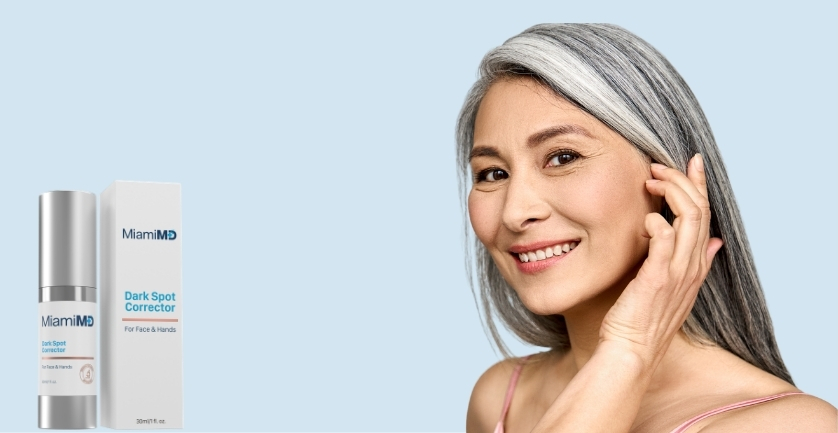
Dark spots are some of the most stubborn marks on the skin, and if you’re a week or two into Dark Spot Corrector, wondering whether it’s working, let me reassure you.
The brighter, softer skin you can already see is just the start, and the fading you’re actually waiting for is happening on a deeper layer.
Here’s what’s going on underneath…
What’s Actually Happening Under Your Skin
Your skin has cells called melanocytes. Their job is to make melanin, the pigment that gives your skin its color and helps protect it from the sun.
To make melanin, melanocytes rely on an enzyme called tyrosinase. When everything is working well, your skin makes just the right amount of melanin (pigment), spread evenly. That’s when your skin tone stays clear and even.
But after decades of sun exposure and as your skin ages, the cells around your melanocytes start sending the wrong signals. Tyrosinase gets stuck “on” in certain areas, and those melanocytes keep making pigment long after your skin needs it. That excess melanin builds up in one spot and becomes visible on the surface.
That’s the real cause of age spots and sun spots.
It’s pigment production that’s stuck in overdrive.
And that’s why scrubs and surface products never seem to make dark spots go away for good.
They “buff” away pigment at the surface, but underneath, your skin keeps making more, so the spots come back.
Dark Spot Corrector works on the pigment process itself.
That’s a slower process than simply brightening the surface, but with consistent use, it gives longer-lasting results.
Why Dark Spots Show Up Where They Do
Dark spots appear first on the face, the backs of the hands, the chest and the arms, and there’s a reason it’s those areas specifically.
They’re the areas that get the most sun, year after year, even when you’re just driving, walking or sitting by a window. The skin on the hands and chest is also thinner, so there’s less between the sun and the melanocytes underneath.
So the pigment imbalance building up everywhere becomes visible in those areas first.
By the time you can see a spot on your hands or cheeks, those melanocytes have been overproducing for years.
What Each Ingredient Is Doing
Kojic Acid, the pigment blocker. Helps inhibit excess melanin production by an astonishing amount.
Alpha-Arbutin. While Kojic Acid shuts down the enzyme that’s already running, Alpha-Arbutin stops excess pigment before it forms.
Resveratrol. Blocks skin-discoloration caused by Tyrosinase from 3 different pathways.
Apricot Kernel Oil. Kills off abnormal cells containing too much melanin.
Some ingredients make your skin look and feel better within days. Others change the pigment itself over months.
What to Expect, and When
Dark Spot Corrector has one of the clearest timelines of anything we make, and it’s worth knowing all three stages.
Within the first few weeks your skin will feel softer and look brighter. Many women notice their spots softening around the edges.
From one to three months you’ll start to see your spots visibly fade and your skin tone even out. This is when the Kojic Acid and Alpha-Arbutin have had time to calm overactive melanocytes, and the darker pigment already in your skin has had time to rise to the surface and shed away.
From three to six months you’ll see a significant reduction in your most stubborn spots. This is the stage where your skin has truly rebalanced, and the change is in your pigment rather than just on the surface.
If you’re two weeks in and your skin looks brighter but the spots haven’t faded yet, you’re exactly where the timeline says you should be. The fading stage hasn’t started showing yet. It’s working its way up.
Why Consistency Is the Most Important Part
Use Dark Spot Corrector twice a day, morning and night, after you wash your skin. Use a small amount, about the size of a grain of rice, on each spot. Rub it in gently in small circles.
Rubbing in circles helps the formula spread evenly and soak into your skin.
And here’s why using it twice a day matters so much.
Dark Spot Corrector only slows down extra color while it’s on your skin. If you keep skipping days, your skin starts making extra color again, and your spots fade more slowly.
Think of it less like a product and more like brushing your teeth. In my experience, the women who see the biggest changes are the ones who use it twice a day for three to six months.
And please wear sunscreen, SPF 30 or higher, every single day. The sun is what pushes your skin to make too much color, so protecting it keeps your progress from slipping.
One Last Thing
Dark Spot Corrector is paraben-free, cruelty-free, fragrance-free, BHA-free, hypoallergenic and free of toxic chemicals, so it’s suitable for delicate areas like your face, neck and chest, and for skin that reacts easily.
Apply it anywhere you have dark spots: your face, forehead, hands, arms, neck and chest. There’s no reason to limit it to one area.
All individuals are unique. As such, results may vary.
Written by: Manjula Jegasothy